



Top 3 Places Where Art Changed the Identity of a City

Updated: Sep 10
In Montmartre, artists turned a Paris hillside into a symbol of bohemian creativity.
In Barcelona, architecture became art on a citywide scale.
And in Rio de Janeiro, enormous murals transformed once-overlooked walls into some of the city’s most striking landmarks.
These places show that art does more than decorate a destination.
Sometimes, it changes how the world sees it.
Montmartre, Paris: Where Artists Built a Bohemian Legend

Source: Canva.com
High above central Paris, Montmartre became a gathering place for painters, writers, performers, and free thinkers.
Artists including Picasso, Renoir, and Toulouse-Lautrec spent time here, drawn by cheaper rents, cafés, nightlife, and a creative atmosphere far removed from more formal parts of Paris.
That artistic legacy still shapes the neighborhood today.
Narrow streets climb toward Sacré-Cœur. Portrait artists work around Place du Tertre. Old cafés and studios recall a period when Montmartre helped redefine modern art.
The neighborhood became more than a place where artists worked.
It became part of the mythology of Paris itself.
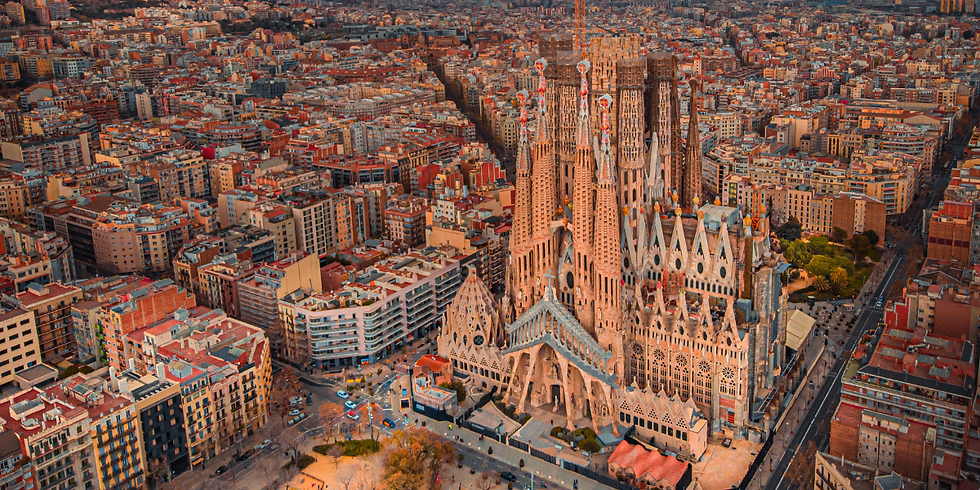
Barcelona, Spain: Where Architecture Became Art
Source: Canva.com
Barcelona looks different because artists and architects were willing to imagine something different.
The clearest example is Antoni Gaudí.
His flowing forms, colorful mosaics, unusual towers, and nature-inspired designs helped give Barcelona an architectural identity unlike almost any other European city.
La Sagrada Família rises above the skyline, while Gaudí’s influence appears throughout landmarks such as Park Güell and Casa Batlló.
But Barcelona’s creativity extends beyond one architect.
Tilework, sculpture, public spaces, historic buildings, and bold modern design make art feel woven into the city rather than confined to museums.
Here, the streets themselves can feel like a gallery.
Rio de Janeiro, Brazil: Where the Walls Became Canvases

Source: Canva.com
Rio de Janeiro is famous for beaches and mountain views, but another side of the city appears on its walls.
Street art has become an important part of Rio’s visual identity, especially around areas such as Praça Mauá.
Murals bring enormous bursts of color to urban spaces, often telling stories about Brazilian culture, identity, community, and history.
One of the most dramatic examples is the large-scale public art created around Rio’s revitalized waterfront, where formerly industrial spaces became destinations in their own right.
The result is a city where art can appear unexpectedly.
Around a corner. Across an entire building. Along a street that suddenly becomes impossible to ignore.
Three Places Transformed by Creativity
Montmartre, Barcelona, and Rio de Janeiro use art in completely different ways.
Montmartre became famous because of the artists who lived and worked there.
Barcelona turned architecture into one of its defining attractions.
Rio transformed public walls into enormous canvases.
Together, they show that creativity can change more than what a city looks like.
It can change what a place means.
A Simple Way to Experience Them From Home
Discover Live offers live, interactive virtual tours of places like Montmartre, Barcelona, and Rio de Janeiro, led by expert local guides. You can explore artistic neighborhoods, remarkable architecture, street art, and the stories behind each destination in real time.
A World That Belongs to Everyone
Eight years ago, Discover Live made a promise: the world belongs to everyone.
Not just those who can travel easily. Not just those with the time, health, or logistics. Everyone.
Something new is coming in 2026 that takes this promise even further.
Be first. Join the waitlist and step into a new way of experiencing the world.


Comments